Articles

Monday, 6 June 2016

Funding boost for Rushy Bank

Witney Gazette article June 2016
Article in Witney Gazette, June 2016
Last week saw the welcome announcement that a cash boost of £200,000 from a West Oxfordshire District Council grant had been given to the Young Dementia UK Homes project for Rushy Bank. This money will help build the first residential facility for people suffering from early onset dementia in the country in Charlbury.

Since West Oxfordshire District Council's resolution to grant planning permission last November, the Rushy Bank Partnership have been working hard to satisfy a number of planning conditions for the site, including finalising road layouts, an archaeological dig, and the legal agreement over financial contributions (section 106). With these now almost resolved, the partnership is looking forward to formal planning consent in the near future.

Monday, 23 November 2015

Rushy Bank planning permission


On 2 November the Uplands Area Planning Sub Committee approved the Rushy Bank Partnership's planning application by 9 votes to 3!

The publicly available minutes of the meeting give a very balanced and useful account of the discussion and the democratic way that these issues are handled:

Land South of Forest Road, Charlbury

"The proposed layout of the site was shown and amendments to the previously submitted scheme were outlined. In particular it was noted that there was a smaller number of units and the layout on site changed.

Mr Rod Evans addressed the sub-committee in objection to the application. A summary of the submission is attached as Appendix E to the original copy of these minutes. Mr Evans, in response to Mr Beaney, clarified that he was not against development in the Area of Outstanding Natural Beauty (AONB) but any growth needed to be sustainable.

Councillor Liz Leffman, local ward member, addressed the sub-committee in support of the application. A summary of the submission is attached as Appendix F to the original copy of these minutes. Mr Cotterill asked Ms Leffman if she considered the site suitable for dementia care. Ms Leffman indicated that the facility would provide support and help for residents and would be well managed.

Mr Jeremy Smalley, agent for the applicant, addressed the sub-committee in support of the application. A summary of the submission is attached as Appendix G to the original copy of these minutes.

The Development Manager continued his presentation and advised that the main issues for consideration were principle, precedent, siting design and form, landscape impact, highways, amenities, archaeology, benefits and S106 contributions.

The sub-committee noted there was an element of self-build in the application and that the development was considered sustainable in the proposed location. It was acknowledged that it was an on balance decision relating to aspects of sustainability.

The Development Manager concluded by recognising there was a range of views both for and against the proposal. It was highlighted that the scheme was being locally led and the amendments to the previous scheme were an improvement and acceptable in their own right. The Development Manager suggested that the benefits accruing from the development outweighed the harm when the relevant policy and other tests were applied and as such an on balance approval could be recommended.

The Development Manager advised that consultation responses were still awaited from Oxfordshire County Council in respect of highways and archaeology. The recommendation was therefore for approval subject to clarification of the legal agreement and the receipt of responses in respect of highways and archaeology. It was confirmed that if the outstanding responses raised objection then it would be referred back to members.

Mr Graham highlighted concerns about the previous application but acknowledged the considerable amount of consultation since then. Mr Graham suggested that it was still a difficult decision.

Mr Graham acknowledged that the development was on the edge of Charlbury and the changes that had been made to reduce the impact on the AONB. Mr Graham advised that, on balance, the development was acceptable and the increased buffer zone would help reduce the impact.

Mr Graham then proposed the officer recommendation and this was seconded by Mr Owen.

Mr Owen indicated that the scheme had been developed over some time and was a local project that showed innovation and vision and was well designed.

The Development Manager, in response to Mr Cotterill, confirmed that the road within the site would predominantly remain private.

Mr Colston expressed concern that the houses were an adjunct to the main development and probably would not be acceptable on their own. Mr Colston suggested the dementia unit was some distance from the town and sought clarification on whether there would be time limits on construction of the self-build units.

The Development Manager indicated that there was a waiting list of people wanting to construct their own homes and whilst there were some legal options it was likely that applicants would have a financial imperative to complete as soon as possible.

Dr Poskitt indicated concern at the location of the footpath and access to Charlbury. Dr Poskitt advised that it was important that the archaeology situation was clarified on site and asked about the moving of the speed limit on the road. The Development Manager reiterated that if there were any issues relating to archaeology then the application may need to be referred back to the sub-committee. The Senior Planner advised that it was proposed to move the speed limit further away from the access.

Mr Saul, in supporting the proposal, asked if the footpath would also access the railway station. The Senior Planner indicated that this could not be confirmed.

Mr Cottrell-Dormer suggested the scheme was too remote from Charlbury and it was wrong for dementia patients to be placed that close to a river and railway line. The Development Manager reminded members that residents safety was primarily an issue for the operators of the home and they had a management plan in place.

On being put to the vote the proposition was carried.

Permitted, subject to a legal agreement, conditions and no objection being raised in respect of highways and archaeology."


Thursday, 29 October 2015

West Oxfordshire support for self-build

screen grab from WODC news page on self-build
WODC news item on their support for self-build

A news release this month from West Oxfordshire District Council shows how important self-build is becoming in planning policy terms:

News release

Helping aspiring homeowners create their own ‘grand designs’

West Oxfordshire District Council is on the look-out for anyone with a local connection to the District who has ‘grand designs’ to build their own home.

As part of the Government’s ‘Self-build and Custom House-building Act,’ the District Council would like to hear from anyone hoping to build their own home or looking to contract a builder to construct it for them. This includes individual homes and larger developments.

Cllr Warwick Robinson, Cabinet Member responsible for Planning said: “We believe there is an interest in custom and self-build housing within the District as it can be seen as a more affordable route to home ownership and it often inspires innovative, creative design and construction

“We are keen hear from anyone who has any self-build plans and are urging them to sign up to our new online register. This will help us find out more about the number and types of homes they would like to build as we are also working with other individuals and groups to identify suitable land for such projects.”

“Signing up to the register doesn’t mean we can guarantee that a suitable plot will be identified, or become available, however we will do everything we can to help.”

The Council’s self-build register will be reviewed regularly, helping to inform them of the level of demand for plots in West Oxfordshire and enabling them to develop a strategy for matching people to plots in their area.

Self-build homes are subject to the same requirement for planning permission as other homes.

For more information about custom and self-build housing, including sources of funding and advice, or to register an interest, see the Council’s website www.westoxon.gov.uk/housing or call 01993 861000.

Monday, 26 October 2015

Oxford housing crisis & Charlbury

screen grab of BBC news item on Oxford housing crisis

A BBC news item of 19 October makes clear the extent of the housing crisis in our region. Oxford is now one of the most expensive and unaffordable cities in the UK, and those on low and middle incomes are being priced out. This is leading to longer commutes, pressure on the roads and a lack of people to do the jobs that we all rely on to keep places running.

The report discusses objections to new homes in places like Eynsham, who are fearful of the changes that new homes will bring to their communities. But with a main line railway station into Oxford and major new community facilities in the pipeline, Charlbury needs to make a contribution to this local crisis.

Friday, 11 September 2015

Rushy Bank reapplication


Revised layout for Rushy Bank site, September 2015

The Rushy Bank Partnership consisting of Young Dementia UK Homes, the Beacon Project Charlbury and our development partners, resubmitted a planning application for the Rushy Bank site at the beginning of September.

We will be holding a public exhibition of the revised proposals in the Corner House, Charlbury, on 12 September 2015, 10-12pm.

The Revised Development Proposal 

  • No housing along the Forest Road frontage. This is to address concerns about the potential for archaeology in that area.
  • Previously proposed mini roundabout replaced by T junction
  • Reduction of number of homes from 29 to 25
  • Further revisions to house design and positioning in response to community comments


The Benefits

  • A supported 12 bed living facility for Young Dementia UK Homes for those suffering from early onset dementia
  • All homes for sale are custom/self-build with priority for local people. 50% of these are at discounted sale prices to deal with the affordability gap in Charlbury’s housing supply.
  • Scheme could make a significant financial contribution towards education (OVER £100,000 based on County Council figures) and other County and District provided services, and funds towards the Community Centre or other priorities identified by the Town Council.
  • Sustainable location close to railway station and no further away from town centre than the extent of Ticknell Piece,The Green and Woodstock Road houses. Closer to the Town Centre than the recently approved Ditchley Road housing. 
  • Very low visual impact as a result of extensive landscaping, careful siting, low density and location behind the employment area. 
  • Up to 12 jobs associated with Young Dementia Home 
  • Additional residents will help to sustain local amenities and facilities 
  • Improvements to highway safety that will slow traffic as it approaches the town down Forest Road.

Thursday, 26 March 2015

Rushy Bank & affordable homes

Section about affordable housing in "Friends of The Evenlode Valley leaflet"
Everyone in Charlbury has received a leaflet from the "Friends of The Evenlode Valley" and a number of people have submitted public planning comments on the basis of the information contained within it. It does however contain some misleading information, which should be taken into account.

There are three main social benefits of the Rushy Bank project: more affordable housing for local people, sheltered housing for those suffering from early onset dementia, and funds (section 106) for infrastructure improvement and community use by the town.

Let's be clear: this project has not been instigated by a developer looking for cheap land to make a big profit. It has been developed by Young Dementia Homes UK and The Beacon Project Charlbury over a number of years, and we went out and found a Charlbury-based developer and a Charlbury-based architect. Even the ecological, archaeological and landscape consultants are Charlbury-based! (that's the kind of town we are).

"Affordable" housing is a grossly overworked term, isn't it? So let's be clear what this application contains. 29 houses are being proposed, in addition to the 12 bed sheltered housing unit. Of those, 9 will be built by a social housing provider. That's low rent, shared ownership, etc. That's the usual sort of "affordable" housing we are used to. But what isn't clear in the Friends leaflet is that social housing providers only pay something like £10-15k per plot for land!

But this project is innovative in having another 10 out of the 29 houses proposed as being custom-built for Charlbury people at below market value, probably at least 25% below! And those enjoying this discount won't sell it on at a profit as soon as it's built, as there is a proposal by the Beacon Project for a phased lock-in for this discount so that it can be passed on to the next local person wanting to buy a house. The mechanism for passing on discounts will be wrapped up in the section 106 agreement that will accompany any planning consent and the team are liaising with the planner and housing officer to finalise this.

The other 10 houses would also be custom-built (i.e. internal layout, number of bedrooms, etc) and be sold at full market value. The reason these are needed is to allow the landowner enough of a return on the land to allow for the very low, or discounted land return for the rest of the development, and also to fund the road improvements, landscaping, groundworks, community payments etc.

So, that's 9/29 social housing (31%), 10/29 discounted custom-build housing (34.5%) and 10/29 full market value housing (34.5%). 

Given that both the social housing and the Beacon Project (discounted) housing would all be priority for local people, that is 65.5% of the development which would be more affordable housing for local people.

We hope this counters some of the misinformation on the issue of who is really benefitting from this proposed scheme. The developer is also proposing to run the development as an open book so that everyone and anyone might inspect the financial side. This isn’t a requirement.

The issue of the location is an entirely different matter - that is up for debate and depends on where we see acceptable development in the town, and how sensitive this scheme is to its proposed location.

We hope this is useful information about some aspects of the proposed development that we feel passionately about and have worked towards for a number of years in our own town. Let the application stand or fall on its merits, but not on false information.

Friday, 6 March 2015

Rushy Bank planning application - second public display

Now the planning application has gone in and information leaflets distributed around the town, the Rushy Bank development partnership will be holding a second public display of proposals for the site on Saturday 21 March (10-12) in the Corner House. We look forward to seeing as many people as possible there to look at the exciting detailed designs for the site.


Tuesday, 17 February 2015

Rushy Bank planning application: FAQs

Frequently asked questions about the Rushy Bank project prepared by The Rushy Bank Partnership, including the Beacon Project and YoungDementia UK Homes.
Birds eye view of proposal for Rushy Bank
1. Will the development open the door for further development around the station?

No, it won't set a precedent. We believe that the development is responding to identified local housing need and is therefore an exception. Any future development would have to demonstrate that it was similarly meeting a particular local housing need. The surrounding land would not be suitable for market housing due to its Area of Outstanding Natural Beauty status.

2. Why can’t the proposed development be provided on a brownfield site?

Local Housing Need

Para 47 of the National Planning Policy Framework identifies that the supply of housing should be significantly increased. The Oxfordshire Strategic Housing Market Assessment (SHMA) concludes that there is a significant need for new housing within Oxfordshire. In response to the SHMA, West Oxfordshire has increased the proposed housing numbers in the emerging Local Plan 2029 from 5,500 to 9,450. Within the emerging Local Plan 2029, Charlbury falls within the Burford and Charlbury Sub-Area. A focused housing consultation undertaken by the Council during August and September 2014 identified that 650 new homes will be delivered in the Burford and Charlbury Sub-Area during the plan period. West Oxfordshire has acknowledged, as recently as January 2015, that it does not have an identified five year land supply and, as such, Government policy says that there should be a presumption, by the local planning authority, in favour of sustainable development.

3. Doesn’t the fact that the site falls within the Cotswold Area of Outstanding Natural Beauty mean that it is protected from any development?

One third of West Oxfordshire falls within the Cotswolds Area of Outstanding Natural Beauty (AONB) and there are 51 Conservation Areas. The site’s location in the Cotswolds AONB does not prevent development. The statutory test for development within a Cotswolds AONB is whether it will conserve/ enhance the character and appearance of the area. The joint project's architects, Oxford Architects and the Oxford Design Studio have successfully designed a scheme which is sympathetic to the surrounding area and which utilises ematerials used in buildings around Charlbury.

4. Isn’t the site outside Charlbury’s settlement boundary?

The adopted West Oxfordshire Local Plan 2011, or the emerging Local Plan 2029 does not include settlement boundaries.

5. How will the impact of the building on the local environment and views be reduced in view of its location?

The two architects involved with the development, Oxford Architects and the Oxford Design Studio, have created plans for a design that will blend into the site as much as possible taking into consideration the contours of the site. This allows us to have single and two storey carefully placed along the new access road. The YDUK Homes facility includes meeting rooms which will be available for community use. The design will use local stone, render and timber walls and a mixture of traditional and sedum roofs to minimise the visual impact.

6. What impact will the development have on traffic levels on Forest Road?

The location of the development will assist in ensuring that traffic movements are dispersed. Its situation next to foot paths, the railway station and bus routes from the station should help to minimise car usage. The highways access solution will assist in slowing traffic as it approaches the town down Forest Road hill.

We are not anticipating high levels of traffic in and out of the YDUK Homes facility as the 12 people living there are unlikely to have their own cars and the staff supporting them will be encouraged to use public transport to get to work.

7. Flood Risk Assessment

The site is outside the flood risk area. A flood risk assessment report will accompany the planning application and this will be a consideration by the local planning authority and Environment Agency in reviewing the sites suitability for development.

8. Why has the Beacon Project chosen this site?

The Beacon Project Charlbury has spent four years looking for a site in Charlbury suitable for an environmentally sustainable community self-build project. Rushy Bank ticks all the boxes: Cornbury Park has made the land affordable for self-builders; it is close to public transport and no further from the centre of town than houses down Woodstock Road; it has environmental features, such as a very active spring, meaning that the housing there might be an exemplar for sustainable development; and finally we are thrilled with the proposed community mix that is proposed for this site, including affordable, self-build, market and sheltered housing. We don’t think we could hope for a better site from an integrated community point of view.

9. Why have YDUK Homes decided to change sites from the Cricket Club to Rushy Bank?

During YDUK Homes’ public consultation last year, some people raised concerns about the previous choice of site adjacent to the Cricket Club, principally about access and flood risk and steps were taken to mitigate these risks and allay people’s concerns.

The Rushy Bank site was not available to YDUK Homes at the time they were offered the land behind the cricket club so when YDUK Homes were approached by the Rushy Bank Partnership to be part of their planned development we decided it was worth revisiting our architectural plans and financial projections to be part of this broader community development. The ‘new ‘site has all the benefits of the ‘old’ site, notably its proximity to the town with all its amenities whilst also locating our residents in the centre of a potentially lively residential community, in line with our aims.

10. Why has YDUK Homes chosen Charlbury?

Charlbury fits all the criteria for the location of our planned facility: within or on the edge of a town within Oxfordshire, and with access to good transport links making it as easy as possible for family and friends to visit.

Many of the over 30 sites we’ve considered over the last few years have been too isolated, or we have been in competition with private developers who can afford to pay market values. We have also looked at central sites in large towns, but these have either been too small or too expensive for us.

We have also considered two other sites suggested by Charlbury Town Council, one at Little Lees and the other at Ticknell Piece. After careful consideration we decided that these sites had potential for market housing and as a consequence, it was deemed likely that other social and private housing proposals would come forward which could jeopardise our purchase of the sites and delay us progressing with our plans.

The site in Charlbury meets the requirements for our facility. The involvement of the community will be a vital part in reducing the isolation of people with young onset dementia and Charlbury residents have indicated that the project would be a welcome addition to the town.

11. Will the YDUK Homes scheme also give priority to local people?

Our funders are very clear that the priority will be given to people living in West Oxfordshire. If we are unable to find someone from West Oxfordshire to fill a vacancy we will then look for applicants across the whole of the County and people who live in neighbouring Counties who want to live in Oxfordshire to be nearer to family and friends. At the moment many people who live with young onset dementia in Oxfordshire have to be placed in specialist homes outside of the County, as there are no specialist homes available. This makes it difficult for their families to visit them so it’s important these people are given the chance to move back to be nearer their relatives.

12. Will this location be safe for people with young onset dementia?

The home will be securely fenced and have a controlled gate at the entrance. All of our residents will have a risk assessment completed on a regular basis and, with permission, have personal locators to allow them freedom to move around but allowing staff to monitor their whereabouts. Many people with young onset dementia continue to follow routines from their past and this can be reflected in their desire to go to a particular place as they would if they were going to work or walking the dog at the same time every day. We feel that this past should be taken into account and understood in order to help people to feel fulfilled rather than restricted in their lives.

People with young onset dementia often get bored or frustrated if they don’t get enough exercise and activity; this will be addressed with lots of opportunity for residents to take part in activities in the home, as well as in the local community with the support of our staff.

13. What is the timetable for commencing the building works?


The Rushy Bank Partnership are planning to submit their joint application in February 2015 and are aiming to start the building works in October 2015.

Monday, 26 January 2015

Thank you Charlbury!

We had a fantastic response to the community display in the Corner House on Thursday 15th January, and would like to express our thanks to everyone who turned out to find out more about the proposed development, and to express their views. We estimate that up to 150 people came through during the afternoon, which is a terrific response.

The Beacon Project Charlbury members who were there fielded a number of enquiries from local people interested in environmentally sustainable affordable or self-build housing near the train station. If you are reading this because you didn't get a chance to come along and register interest then please get in touch via email.

More information about the plans can be downloaded from www.rushybank.co.uk.

We also appreciated the chance to speak to a few residents living on the Evenlode valley side of the town and discuss their concerns. We hope that the Rushy Bank partnership will allay fears in due course and we want to keep the constructive conversation going.

We all love the Evenlode Valley, and we hope this proposal will allow more local people to stay in Charlbury so that they can enjoy it!

There was some great coverage in the Oxford Mail last week about the community event and the project in general (see below - click to enlarge & read). Many thanks to the Wilkinsons for their willingness to go on the record about the local housing need.

Article by Martin Elvery in Oxford Mail, 23 January 2015

Friday, 19 December 2014

Rushy Bank public consultation

Location of Rushy Bank proposed development
 and the other main growth areas of Charlbury

As part of the Rushy Bank Partnership we are holding a public exhibition of the proposals for the Rushy Bank development on Thursday 15 January 2015, 2.30 - 7.30pm in the Charlbury Corner House (Anne Downer Room).

We will be showing people our plans for community self-build homes on the site and inviting local people who express an interest in self-build to sign up.


The Rushy Bank Partnership includes Cornbury Estate as the land owner, Cox Development Partners, a Charlbury-based professional development team, Oxford Design Studio, a Charlbury-based architectural practice, The Beacon Project Charlbury dealing with the community self-build aspect, Young Dementia UK and a local housing association. 

The proposals are for the development of approximately 30 sustainable homes which will include 1, 2, 3, 4 and 5 bedroom affordable rent, shared ownership, intermediate and full market sale housing, all designed to meet the needs of our community.


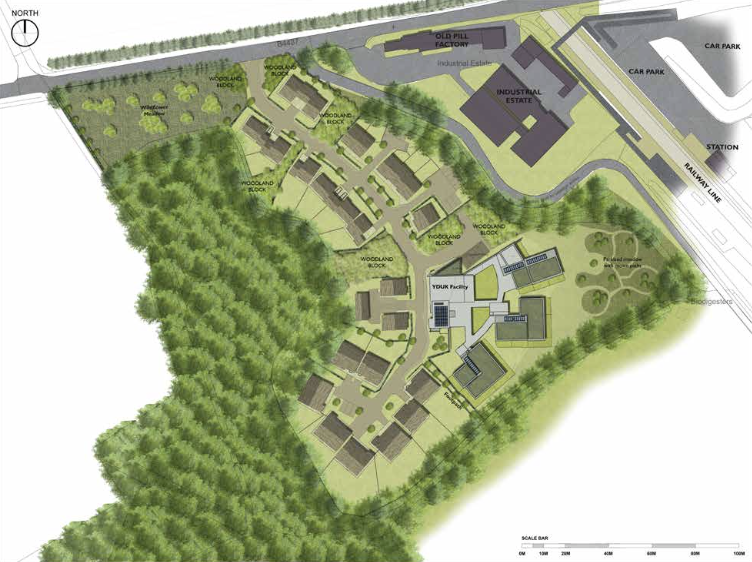
A possible layout for the site, with the
industrial estate and train station to the bottom
The proposals also include land for the Young Dementia UK supported housing scheme which will provide 10 units of accommodation and generate between 10 and 12 full and part-time jobs. The Partnership is committed to use local suppliers, sub-contractors and tradespeople wherever possible on this project. This is a really local partnership right across the board.


The principle is to create a sustainable community that will meet all levels of affordability with preference given to local people to rent or purchase at costs they can afford. The intention is to develop an exemplar for community development and all homes will be built to a high standard with good environmental credentials. There will be approximately equal proportions of each type of housing, subject to the requirements of the local planning authority; coupled with the need to create a viable scheme.

Monday, 22 September 2014

It's time to plan!

Forest Road site in Charlbury (source: Google maps)

After three years of discussion and negotiation about a self-build housing scheme for Charlbury families, it looks as though we have got somewhere at last. With the support of our local landowner Cornbury Park, the Beacon Project is now working as part of a development team for a mixed tenure eco housing development on land at Forest Road, opposite the train station and adjacent to the light industrial area. 

NB This is NOT the field behind the Cricket Club! This development would be on land behind the small industrial estate, which was once earmarked for possible expansion of that industrial estate.

We are currently working with the team on all the elements needed for a planning application later in the year, including the housing needs and specifications of the self-build houses themselves, as well as those of our affordable housing provider, Sovereign Housing. We are also looking at the sustainability and environmental aspects of the site and the common spaces.

If you are a Charlbury household (or have strong links to the town) and would like to express an interest in self-building at Forest Road, do get in touch.

Thursday, 17 April 2014

Town Council update

Timber frame design sketch for Beacon Project by Oxford Design Studio, 2104
Timber frame design sketch for Beacon Project by Oxford Design Studio, 2014
It has been nearly two years since the Beacon Project last updated Charlbury Town Council about progress, so on Wed 16 April Beacon Secretary Chris Morton addressed councillors ahead of the scheduled council meeting. 

The key points made to councillors were that the last two years have involved a considerable amount of community consultation and profile-raising, including:


    • sending a detailed response to the consultations over the draft West Oxfordshire Local Plan in December 2012. The draft Local Plan recognizes self-build and environmental sustainability as key aspects of the UK National Planning Policy Framework and the Localism Act. Our response is detailed here.
    • publishing an article on the aims and objectives of the project in the April 2013 edition of the Charlbury Chronicle, and gaining some good feedback and expressions of interest locally.
    • having an information stand at the Community Led Plan public meeting in July 2013 in the Memorial Hall
    • pursuing options over the Forest Road site with Cornbury Park; contributing towards the Community Led Plan; keeping a conversation going with Sovereign Housing as an affordable housing partner; opened up the core management group to new local families
The councillors were informed that the project has so far undertaken three years’ work towards its aims and objectives, that we are an organised community group with a limited company structure and directors. 

Whilst the project has shifted its emphasis slightly over that period from an interest in co-housing towards self-build, it remains committed to bringing a more cooperative style to any new housing development in which we are involved.

Councillors were also informed that self-build is now a recognised means of solving some sections of the housing requirement, particularly in rural areas. This was recognised in the current West Oxfordshire Local Development Framework.

An example of the project's commitment to environmental issues relating to development can be found in the groups proposals for the Forest Road site in Charlbury, in which we are in negotiation with Cornbury Park regarding feasibility. On this site we are interested in:
  • harvesting natural spring water which rises in the copse above the field. It was estimated in the summer of 2012 as providing 40-50 litres/minute or 50-60,000 litres/day.
  • Towards the bottom of the site we would like to extend the current pond to offset the increased run-off of water from construction and housing (important following the recent floods) as well as a reed-bed for waste management. Despite being next to the sewage works, we won’t need it!
  • We are also discussing with Cornbury the potential of a combined heat and power unit for the whole site using wood by-products from the Estate.
One of the key points made to the councillors was 'who is Beacon Project for?' The points made here were that:

    • Currently several Charlbury families make the core, several of who have rented in Charlbury for more than 5 years because they cannot afford appropriate family sized homes. We all have children in the primary and secondary schools and between us make a big contribution to local societies and the community in general. 
    • We are a group from the (politician’s phrase) squeezed middle – an intermediate group who cannot afford to buy suitable housing in Charlbury, but who can afford private sector rents. We are a growing group nationally.
Why is the project important?

  • If housing development is to take place in Charlbury at all (and it should if we are to remain vibrant), then it is better that we empower people who already contribute to the community to build houses so that they can stay here, rather than being forced to move out. Any other development of family homes in Charlbury will be sold at the rapidly inflating prices that we see today and not contribute to keeping a diverse socio-economic mix in the town.
  • New housing here should reflect the special interest in environmental sustainability that Charlbury is known for, rather than being imposed on the town by developers who have no interest in the character of the town, beyond a superficial stereotype of what colour stone to use.
  • We feel that a creative and environmental approach to local housing like the scheme we have developed will enable us to develop a Neighbourhood Plan that doesn’t just say where new housing might go, but also says what it should feel like as an extension of our current community, and how it will affect our local environment.

Tuesday, 7 January 2014

Self-build mortgages

Photo: Roger Bamber/Alamy published in The Guardian
There are a number of lenders still in the marker for self-build mortgages, according to an article in This is Money from July 2013. Lenders include Norwich & Peterborough, Saffron Building Society, BM Solutions, Leeds Building Society, or specialist Buildstore. Deposits, rates and terms vary depending on planning permissions and the stage of the building.

According to Buildstore, the amount you can borrow to purchase the land will be 75 per cent of its current value, and for the build costs, again you can borrow around 75 per cent of the end value.
A lender will want to see detailed plans for the property, a projection of costs and planning permission details, and the whole application process can take five months on average!

Lenders usually release the money for a self-build in five to seven stages, taking a project from foundations to the finished property. They may want to inspect each stage before signing off on the next slice of money.

According to an article in The Guardian way back in 2011, the UK Government is keen to make financing self-build projects easier to obtain, and from a more competitive selection of lenders.


Friday, 12 July 2013

Charlbury Community-Led Plan (CLP) - public meeting 20 July 2013

Charlbury Community Led Plan on charlbury.info

Earlier this year Charlbury Town Council decided to develop a Community-Led Plan in order "for the community to develop a sound understanding of local aspiration and need" in terms of future development. The Town Council's February announcement about this makes it clear that this Plan should be distinguished from what is termed a "Neighbourhood Plan" under the Localism Act 2012, which outlines specific planning policies for the area and which would require a full referendum of the community. 

We will be presenting the aims of the Beacon Project at the first CLP public meeting organised by the Advisory Group at the Memorial Hall on Saturday 20 July 2013, 9-2pm. The Group are asking community members to list 3 things that they like about the town, and 3 things the town might need over the next 5-15 years. Ideas can be filled in on the postcard sent to residents last week, online, or via e-mail plan@charlbury.info.


Friday, 19 April 2013

Community Housing Project


Published in the Charlbury Chronicle April 2013


Living in Charlbury, any resident might have a view on what constitutes a strong balanced community. Here we do appear to have good social, sporting, cultural and environmental facilities and in most aspects, the community is strong and cohesive. However, very few residents can be unaware of the current debate about affordable rural housing. The 2006 Charlbury housing needs survey indicated that there was a demand for 61 new households.  At present this provision is being met by 15 new social houses in Little Lees, and other schemes are in the discussion stage. Charlbury Town Council estimate however, that the figure of 61 probably still represents the demand level. There can be little doubt that a healthy community requires balance in its constituent parts.

Although there is a formal definition in planning legislation for affordable housing, there is another intermediate category which includes families who, under pre-financial crisis circumstances, would have been able to afford to buy into the housing market. This category often represent the groups that make the rural economy function and includes amongst  readers of the Charlbury Chronicle; nurses, teachers, electricians, builders, retired people and some professionals. This group has no formal recognition in housing need terms and must compete on the open market for either renting or buying properties.

This problem is nationwide of course and one solution developed elsewhere has been to form co-housing groups whereby like-minded people get together and form communities either to purchase a large property which is subdivided or to build a number of homes as a group. Co-housing usually adheres to strong environmental and sustainable agendas. Co-housing and community groups are recognised elsewhere and develop their own sustainable solutions to housing needs, often with the cooperation of their local authority.

Huge changes in legislation from the Big Society and including the National Planning Policy Framework, support for the preparation of local plans and Community Right to Build have been brought into law in the last year or so, most of which are intended to promote locally-driven development. Sustainability is a key driver and although over-used as a term, it not only means designing well-insulated houses in the right location employing appropriate materials but also should mean making sure that communities are well-balanced and thriving.

The current West Oxfordshire District Council Draft Local Plan published at the end of 2012 acknowledges the need for some 350 additional houses in the Charlbury/Burford Area and recognises that the houses must be provided where the needs are. The draft also makes provision for meeting community priorities, recognises that self-build will be one means of delivery and states that there should be a presumption in favour of sustainable development.

The Beacon Project Charlbury was formed and registered as a not-for -profit company in 2011 with the aim of promoting a community housing project , utilising local skills through a self-build programme which we argue is a viable option. We also believe that where communities help themselves there is a good chance of retaining and enhancing community values through shared services and self-management. The idea is not new but has been practised widely since the co-housing movement started in Denmark in the 1970s. 

The Beacon Project has been active in pursuing several potential sites for a community housing scheme (see our blog link) and is still investigating a number of sites including the Forest Road land adjacent to the small industrial estate on the west side of the station. It has to be noted that, although the District Council has stated an ambitious housing target, there has to be an increase in the current very restrictive release of land with suitable planning consent if these targets are to be met. 

We have therefore joined the Charlbury Town Council in their current initiative to prepare a Community Led Plan in which it is hoped there will be recognition of the needs of this key category which will lead to a suitable site being supported. We aim to develop some houses to Passive House standard which is the highest environmental level in Europe and have an established relationship with Sovereign Housing as well as a strong community agenda.

Given the recent changes in legislation and the economic climate in which we now all live, if the objectives outlined above cannot be achieved in a dynamic small town like Charlbury, one would assume that there is probably little chance of success elsewhere. This is not the case however, as up to 40 self-build and co-housing schemes are completed, underway or under consideration in other parts of this country. They are also being actively supported by several local authorities including Cambridge City Council.

Friday, 28 December 2012

Response to Draft Local Plan


West Oxfordshire Draft Local Plan consultation document


West Oxfordshire District Council's Draft Local Plan was published for consultation in October 2012. It contains a wide range of new strategies and provisions that have direct relevance to the aims and objectives of Beacon Project Charlbury, especially in its recognition of the aims of the UK National Planning Policy Framework and the Localism Act. 

The consultation period closed on 19 December 2012, and Beacon Project Charlbury submitted the following specific comments:


3.4. The need for additional housing provision at rural service centres is recognised [Charlbury is designated a rural service centre of the West Oxfordshire district]. 

4.4. The need to sustain rural areas is recognised. 

4.5. The requirement to address the needs of those who cannot afford to buy or rent suitable market housing, including those who wish to self-build is recognised. 

4.6. The overall strategy principles are lauded. 

4.11. The need to respect the local character is welcome although it must be noted that with changes in energy policy, rural as well as urban development may change in nature and appearance due to increasing environmental design requirements such as orientation, passive energy gain, materials and substantially increased Building Regulation requirements under Part L from 2013. The Local Plan should acknowledge that residential design may not in future be a traditional version of the Cotswolds' form but an interpretation of it. 

4.33. 4.34. The additional requirement for housing and the demographic changes for key members of the community in rural areas are recognised. 4.35. The need for an imaginative approach to development including self-build is recognised. What is missing is an acknowledgement that a flexible approach to interpreting the Local Plan may be required to accommodate this approach.
4.37. This is a valuable addition to the Local Plan but clarity is required as if affordable housing is required, formal recognition of the interpretation of this important policy is essential. 

4.93. A separate site allocation approach for suitable development would be welcome as it appears that the development of approved Neighbourhood Plans is likely to be a lengthy process. 

5.32 This is a crucial item in the Draft Local Plan for the Beacon Project Charlbury. It reads:

"The NPPF refers to the possibility of allowing some market housing in rural areas where this would facilitate the provision of significant additional affordable housing to meet local needs. Any such proposal will be considered against the relevant policies of the Local Plan including in particular Core Policy 2 – Locating Development in the Right Places. Where the site is in a location that would not normally be considered appropriate for new housing, it will be for the developer or landowner to demonstrate not only why the site is suitable for housing, but also why a traditional rural exception site approach, i.e. one with 100% affordable housing, is not appropriate or achievable. In other words, they will need to demonstrate why the market housing is needed to subsidise the delivery of the affordable housing. In such cases, any market housing would be expected to be a subsidiary element of a predominantly affordable housing scheme."


The Beacon Project welcomes the provision for more flexibility in terms of the delivery of affordable housing, especially with regard to cross-subsidy by market housing. Since many landowners will not sell land for affordable only given the low land prices available for this, a more flexible planning approach will be necessary in order to achieve more affordable housing of a high environmental standard, as well as releasing more appropriate land for community housing projects, self-build projects, and other developments that will keep rural communities alive and dynamic places to live. 

SUMMARY

Generally, the proposed changes in the Draft Local Plan are welcome, however, for a group such as ours, representing a section of the local community who have been trying to self-manage a much-needed community housing project for some years, there remain what at times seem insurmountable obstacles. There are several important clauses in the NPPF which do not appear to be specifically addressed within the Draft Local Plan although general references might apply. These are highlighted as they have considerable significance for a group such as The Beacon Project:

               The NPPF states that policies in local plans should follow the approach of presumption in favour of sustainable development so that it is clear that development which is sustainable can be approved without delay. All plans should be based upon and reflect the presumption in favour of sustainable development, with clear policies that will guide how the presumption should be applied locally (NPPF para 15). This does not appear to be formally acknowledged in the Local Plan as all presumptions and national objectives are subservient to the Local Plan conditions.
                The NPPF states that planning policies should avoid the long term protection of sites allocated for employment use where there is no reasonable prospect of a site being used for that purpose. Land allocations should be regularly reviewed. Where there is no prospect of a site being used for allocated employment use, applications for alternative uses of land or buildings should be treated on their merits having regard to market signals and the relative need for different land uses to support sustainable local communities (NPPF para 22).
               The NPPF states that if sufficient edge of centre sites cannot be identified, set policies for meeting the identified needs in other accessible locations that are well connected to the town centre (NPPF para 23). Applicants and local planning authorities should demonstrate flexibility (NPPF para 24).
               At the heart of the NPPF is a presumption in favour of sustainable development which should be seen as a golden thread running through both plan-making and decision-taking (NPPF para 14). This sections states that local planning authorities should positively seek opportunities to meet the development needs of their area, and local plans should meet objectively assessed needs, with sufficient flexibility to adapt to rapid change. For decision-taking, the NPPF advises where the development plan is silent or relevant policies are out-of-date, granting permission unless any adverse impacts would significantly and demonstrably outweigh the benefits when assessed against policies in this framework taken as a whole or, specific policies in this framework indicate development should be restricted. (NPPF para 14).
               The NPPF also states that housing should be located where it will enhance or maintain the vitality of rural communities (NPPF para 55) and that Local Plans should allocate sites to promote development and flexible use of land, bringing forward new land where necessary and provide details on form, scale access and quantum where appropriate (NPPF para 157) and addresses the needs for all types of housing, including affordable housing and the needs of different groups within the community... sic,  and caters for housing demand and the scale of housing necessary to meet this demand (NPPF para 159).
               The planning authority is charged by the NPPF to use their evidence base to ensure that their Local Plan meets the full objectively assessed needs for market and affordable housing in the housing market area, as far as is consistent with the policies set out in the framework including identifying key sites which are critical to the delivery of the housing strategy over the plan period (NPPF para 47).
  
Changing economic and demographic circumstances, the Localism Bill, Community Right to Build and the National Planning Policy Framework all indicate that a community group such as the Beacon Project should be able to undertake a sustainable community-based project as most stakeholders agree these objectives are essential to keep balanced rural communities. The Draft Local Plan offers encouragement through some new clauses referred to above, yet these steps are all meaningless unless the Local Plan is interpreted flexibly and with the intent to achieve positive outcomes as set out in the NPPF. The principles required to encourage sustainable community-led self-help development especially in the provision of balanced housing now exist, but an innovative interpretation of the changing legislation and overall direction indicated by the NPPF will be necessary from a planning policy perspective.